This page could also just be called ‘bone health’, because what I’ll really be discussing is the bone mineral density (BMD), which really just means ‘how thick’ your bones are. I’ll also look at the vitamins and minerals which help play a part in bone health, how we check your BMD, and what risk factors there are for people getting thinner bones. There’s a bit on this page, however, one of the main reasons it’s important are the links. These are the links I ask patient to look at, so I thought well, I really should have the easily accessible for everyone. It will also make it easier for my patients to find them (if that’s you, thanks for having a read!)
Osteoporosis and osteopenia are terms I’m going to use a few times here, but what are they?
Both of them really mean the same thing, which is thinning if the bones, leading to reduced strength and increased chances of fractures, or broken bones. The difference between them is really just the extent of how thing the bones get.
Osteopenia is the state in which the bones are thin, but not so thin that they fall into the range which we call osteoporosis. Osteoporosis is a state where the bones are so thin, that you are at a much higher risk of them breaking.
Osteoporosis – Aus Gov Institute of Health and Welfare
Risk factors
There are MANY risk factors, for osteoporosis. Some include increasing age, a post menopausal state for women (which means your period has stopped), use of high-dose steroids, low BMI (or body mass index), smoking, and low levels of Vitamin D or low Calcium intake, just to name a few. You can have a look at the two links below for a more comprehensive list of risk factors.
Risk Factors for Osteoporosis – Healthy Bones Australia
How do we check for osteoporosis?
Screening for osteoporosis occurs when we do a bone density scan (Dual Energy X-ray absorptiometry, or, as I will refer to it from now on – a DXA scan). This checks the thickness of your bones at your lumber spine, as well as your femur, or hip bone.
We give you two scores, for both hip and lumbar spine or lower back.
These are called a Z score and a T score.
One score tells you where your bone thickness is compared to people of your age bracket (Z score) and the other, compared to a healthy adult of the same gender (T score). This is the one we look at for deciding whether or not your bones fall into either the ranges for osteoporosis or osteopenia.
If your BMD falls more than 2.5 standard deviations below the mean T score for a healthy individual of the same gender, you are diagnosed with osteoporosis.
If you fall between 1 and 2.5 standard deviations below the mean for a young healthy individual of the same gender, it’s called osteopenia.
Who can we screen?
I’ll be honest, we can screen anyone, however, we are guided by your risk factors, as well as your clinical history. What we often talk about, however, is ‘who is eligible to get a rebate’ for a bone density scan (or DXA scan). Funnily enough, these can be two completely different things.
You might have a lot of risk factors for Osteoporosis, however, the government says they will not give a rebate to you. This doesn’t meant that we might not recommend you having the scan, but rather, means you’ll have to pay completely out of pocket for the test.
The government has given us guidelines as to when they will give us some rebate for screening, such as when you have a fracture that occurred in a way that would not normally cause a fracture (eg fall from standing).
You can talk with your GP regarding whether or not, you qualify for a rebated bone scan, or whether or not you might need one regardless.
Here are two flow pages that I like – maybe a bit too much info but I’ll leave them here incase you want to have a look / read
BONE DENSITY TESTING IN GENERAL PRACTICE – Healthy Bones Australia
OSTEOPROSIS RISK ASSESSMENT, DIAGNOSIS AND MANAGEMENT - RACGP and Osteoporosis Australia
Treatment options
There are quite a few treatment options that are available for osteoporosis. These range from a once a year infusion, an injection every six months, to a tablet every single day. There are benefits and risks associated with all of them, and the costs, very quite a lot, depending on whether or not you qualify for this medication under the PBS. To go through a list of your options, more comprehensively, and find one that is the best suited for your individual situation/circumstance, please go talk to your doctor
Every day management of osteoporosis and osteopenia
From a dietary point of you, you need to make sure that you have optimise your intake of both vitamin D, and calcium. Vitamin D is actually needed for bone health and to help with the absorption of calcium. Reducing falls also reduces your risk of fractures. This can be done through targeting exercises which aim to increase your balance, and also increase your muscles which can be done with the help of an exercise physiologist, of a physiotherapist.
Although bones do respond well to exercise and increased weight-bearing, the amount of pressure that needs to put on your bones to encourage them to get thicker, is often more than most people would be able to do, such as running or jumping. If you have osteoporosis, you really need to have an individualised exercise program which is tailored to your skill set, age and muscle tone, so we don’t recommend that you just increase exercises yourself, especially those which might increase your risk of falling.
Exercise and Bone Health Fact sheet – Healthy Bones Australia
Exercise Guidelines – Healthy Bones Australia
Calcium
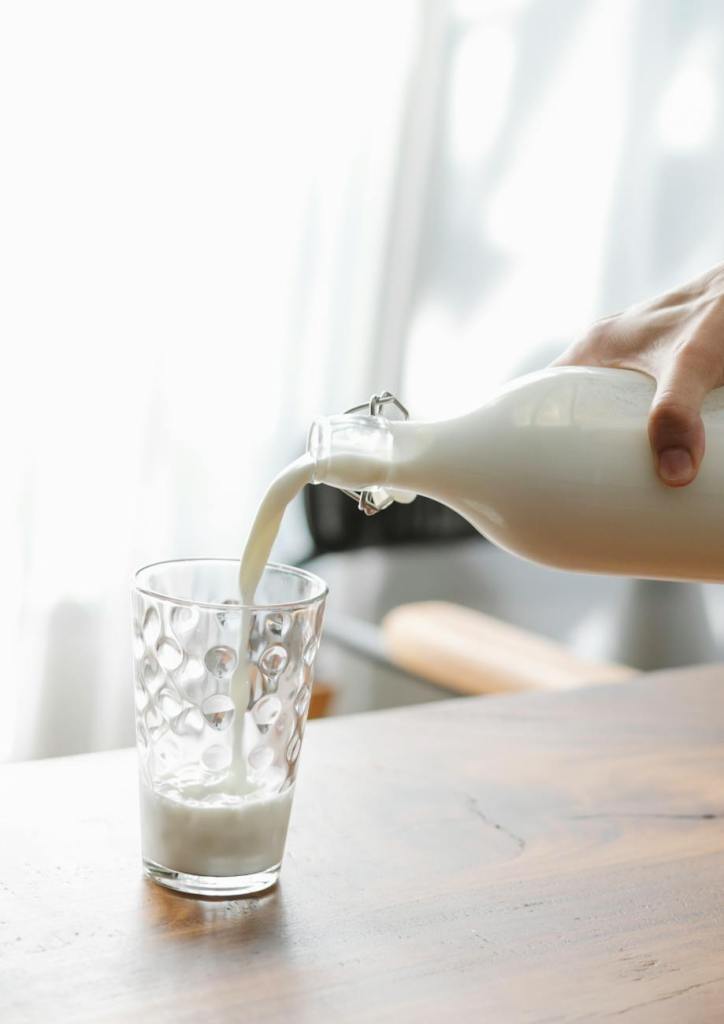
Bones are made up of calcium, so it would make sense that you need it in your diet to ensure your body has enough calcium available to it, to help keep bones strong.
But how much is needed?
For those at highest risk, women over 50 and men over 70, 1300mg of calcium is needed daily. If this is not reached in diet alone, the supplementation can take place. Often, however, with focused encouragement, you can get plenty of calcium out of your diet.
Have a look at the link below to see what foods are high in calcium, and what daily calcium levels are needed for different age ranges, not forgetting that growing children need good sources of calcium also, as their bones are growing.
Calcium in common foods – Healthy Bones Australia
Please remember that even if you are vegan, or lactose intolerant, there are ways to get calcium into your diet, either through fortified milk replacements, or lactose free options.
Vitamin D
Adequate vitamin D is needed for bone health. Vitamin D helps to strengthen bones by helping the absorption of calcium through the gut, and also regulating the levels of calcium within the blood. Vitamin D can be checked with a blood test. If you are deficient in vitamin D, you can take a daily supplement, depending on the amount depending on what your doctor has to say, but also, you can increase the amount of time you spend in the sun. The amount of time that you need to spend in the sun to get adequate vitamin D absorption. Depends on both your skin type, where you live in Australia, as well as the time of year that is. Here is a link for adults in Australia regarding how much sunshine they need to get.
Vitamin D – Consumer Guide – Osteoporosis Australia
Vitamin D is made through ultra violet be raise when they are absorbed from the skin. You need to always be careful, when you are exposed to the sun, as excessive exposure to the sun can lead to things such as sunburn and skin damage, which can lead to skin, cancers, and ageing of the skin.
GENERAL LINKS
So there you have it. A LOT of information in bone health. Here’s the main few websites that I use and recommend people use to learn about, and get information from regarding bone health, but as usual, if you have any questions, please see your GP.
 Dr Rosie Gentle